Zoning Impact on Tenants
This page is dedicated to educating people about how zoning [rezoning/upzoning] can impact tenants who are particularly vulnerable to zoning changes. That's because tenants are not assured their tenancy. The impact on tenants is very different than the impact on owners of property. Neighboring property owners can suffer a negative impact from zoning changes, which can dramatically impact their property values. BUT tenants are especially vulnerable to zoning changes for some of the reasons listed on this page.
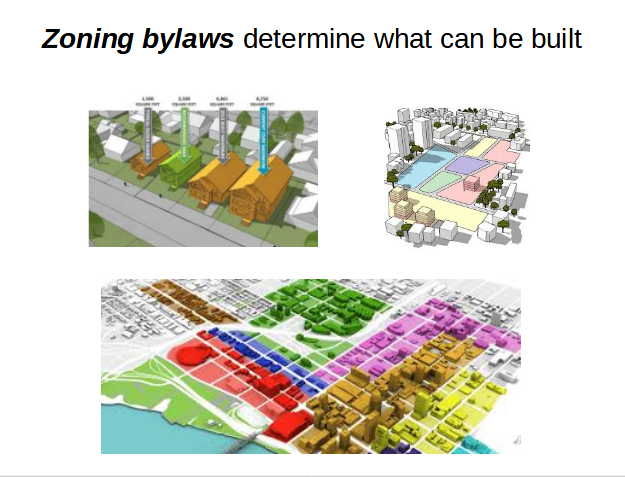
First, what is zoning?
Why is Zoning important to tenants?
Zoning is important to tenants because of the following.
Zoning dictates how many BUILDINGS [homes, condos, offices, etc] are allowed on a specific piece of land [a "parcel" of land, or a "site"]
How many buildings and of what type/size of buildings that are allowed on a parcel of land dictates the "economics" of the land where a tenant lives.
If zoning is changed to allow a land owner to put more buildings on a site, it can create risk for tenants.
That's because if a land owner can make more money by razing the buildings and building new buildings, then a tenant is at risk for displacement by:
- increased rents [to compensate the owner for "lost opportunity"]
- eviction
As a result, it's good to look carefully at a proposed zoning change and calculate what it will do to the site's value, which will dictate rents and/or whether a landlord wants to remove tenants.
To help you understand please click below for examples of expected impacts on tenants in Acton, Massachusetts because of a zoning vote:
- at an apartment complex called Dover Heights
- at small houses and duplexes along Central Street
For a VIDEO explaining how rezoning can be super dangerous to tenants, see this from a housing justice group in San Francisco. They helped get the rezoning passed because they were told "we need more housing" and "the best housing solution is to allow more building" to "relieve market pressure" and the rest of the b.s. the people in the construction industry food chain tell us. The zoning passed, and all it did was fuel gentrification. They didn't understand how it could have failed.

So the housing group got a grant and hired an economist who explained that in a hot real estate market like San Fran*, that supply side solutions can't work. "Incentives" to create affordable housing, MAY create affordable housing in the future, but probably not enough quantity or pricing to accommodate the displaced people, and where do the tenants live in the meantime anyway? *Boston and New York are such a hot real estate markets.

This site is committed to educating people about concerns around zoning that can harm people...
See below and several other pages on this site have info specific to the Acton 2024 Town Meeting votes to rezone Acton. NOTE: If there are errors in the Town Meeting info on ResponsibleZoning.org, please know the the authors did not intend to publish errors. The Town refused to provide numbers and we did our best to estimate based on work by local volunteer financial analysts/engineers.
We plan to keep the info below
for historical purposes, because it may be useful to people.
See below for the historical info.
MBTA and SAV Zoning Will Increase Tenant Displacement Risk VOTE NO! on Articles 12 & 13
If these zoning articles pass at Town Meeting, land owners in the zoning district will be able to make a lot of money by evicting their tenants.
How is does that help the housing crisis? We could not live with ourselves, if we voted for these zoning articles knowing that people who are already struggling would be even more worried and stressed because of our actions.
Here is an example of what we expect to happen in various neighborhoods
MBTA Zoning at Dover Heights

SAV Zoning at River Street
