Welcome to Responsible Zoning!
Let's make sure our towns are engaging in responsible zoning! to ensure just, affordable, and sustainable land use!
See Acton, Massachusetts specific info here on this site, as well as general "responsible zoning" info for any town!
- What is Zoning? Why is it important?
- Tenant Displacement Risk
- Small Business Displacement Risk
- Environmental Impact


This website is focused sharing info on the impacts and concerns of "upzoning"
There is a trend in the country whereby local and state government entities are trying to address housing needs by allowing developers less strict rules in the hopes that they will build enough of the right type of housing that the need for housing will be "satisfied". This is called "satisfying the market". Or "market-based solution". This is better known as "TRICKLE DOWN". Or "supply-side" solutions when the solution relies on the developer doing something in his/her best interest and then it also helps the community. We have doubts that it's a good idea for government to help private for-profit developers try to satisfy the market, in the hopes that this will help the community unless enough of the new housing will be reserved [legally binding] for income levels that are most in need. And we're not even sure it's possible to satisfy the housing market in hot markets like Boston at all using supply side housing solutions. But you can decide for yourself. We don't want to try and convince you. This site is designed to provide you with information that you probably won't get from government entities, or professional "planners", developers, which are focused on selling the public supply - side solutions to allow more building.

For the record, the authors of this website believe "housing is a right" and very much concerned about ensuring we have enough housing for "everyone". We believe that everyone deserves to have a place to live within their abilities, and that government has a duty to do what it can to ensure that everyone has a safe and healthy home. This doesn't mean that we think everyone should have their own mansion. But we believe everyone should have a safe place to live.
For existing tenants, zoning is critical to pay attention to, because if the government changes zoning, the land owner who owns your home [apartment, condo or house] may have an economic incentive to evict you. Sooo...if you see a public notice that the local government is planning to change the zoning of the land you live on, PAY ATTENTION! Governments are required to notify the public of a proposed zoning change. We will help you look into the details and the potential "impact" of the proposed zoning. Check out the rest of this site, email us for suggestions on how to determine the potential impact. This site was designed with you in mind. The authors of this site, learned of an upzoning proposal in their town and when they realized the proposal would impact over 100 tenant families, they got organized and started explaining to tenants what was being proposed and how it might impact them. See here for our page focused on tenant impact of upzoning.
Now, back to explaining upzoning.
The core of the "supply-side" approach to solving the "housing crisis" is to allow more housing units [condos, houses, etc] on an acre of land. The "supply-side" approach, relies on the "market" to provide what the public needs. This site is run by people who are not convinced that supply-side solutions will do much good. The evidence has shown that supply-side approaches to satisify the housing needs of everyone is limited at best, and dangerous at worst.
Having more housing units on a parcel of land is called "higher density". Usually more "multi-family" housing. Multi-family housing is housing where one housing unit [like an apartment or condo] shares at least one wall with at least one other housing unit.
This can be a good thing because if you bunch [cluster] housing units together on one part of the land, then the other part of the land can be saved from destruction. There are plenty of construction industry and government sites which illustrate the good things about clustering houses. But it's not always a good thing, which we will illustrate on pages on this site.
But first, let's back up, because we feel a need to explain what "sprawl" is so you can understand how "clustering" is different than sprawl. Traditional housing development is called "sprawl". Sprawl is where everyone has their own lawn and land and very little land is shared.
This sounds lovely in theory, but what happened in most towns is that forests are dessimated by housing-developments, and land was further subdivided and more and more housing-developments were built, and in the end, there's little land saved from destruction.
See an extreme example of Sprawl to the right =>
See an extreme example of Sprawl to the right =>

There's another way of building new housing. And that's called "clustering. Clustering new housing units can be much better for the environment than sprawl, because a cluster of housing units can share more "open space".
And a lot of people like living in villages of clustered housing surrounded by forests. It sounds lovely, doesn't it?
See a wonderful example of Clustering =>

But clustering can use up all the land just like sprawl does, unless clustering "zoning rules" require developers to "preserve open space". See the two pictures above. Note that one preserves a lot of green trees and land which is not built on. That green part is called "open space". Note that the sprawl picture has virtually zero "open space."
However...Just because you cluster new buildings doesn't mean there is any green space at all, unless the developer is REQUIRED to save open space.
Clustering can fill up the land, too. Just because there's a cluster of houses, doesn't mean that the forest is saved. See this picture for an example of clustering that is a lot like sprawl =>
Clustering can fill up the land, too. Just because there's a cluster of houses, doesn't mean that the forest is saved. See this picture for an example of clustering that is a lot like sprawl =>

Choose other topics from the menu above to see more

See below the following notice to see impact info on 2024 Acton Town Meeting.
NOTICE: This site is committed to educating people about concerns around upzoning that can harm people...
See below and several other pages on this site have info specific to the Acton 2024 Town Meeting votes to rezone Acton
We plan to keep the info below
for historical purposes, because it may be useful to people.
See below for the historical info..

Acton Voters voted 5-9-24 to enact MBTA Zoning and SAV Zoning to put tenants at risk by "upzoning"!
Stay tuned to this site. Just because Acton Voters did this once, doesn't mean we're done. We are told by the Town that they plan to "incentivize" developers all over Acton. [people in other towns, know that this is coming your way] We'll be updating to help people learn how zoning that "incentivizes" [code words for allowing devleopers to build more condos on a site] will NEVER create truly affordable housing for people making less than $80K/year, or be sustainable, either for environment, or taxpayers. Stay tuned!
This site is committed to educating people about concerns around zoning that can harm people... See below and several other pages on this site have info specific to the Acton 2024 Town Meeting votes to rezone Acton We plan to keep the info below for historical purposes, because it may be useful to people. See below for the historical info. NOTE: the Town's claims that there are "errors" on this site is due to the Town NOT ANSWERING OUR EMAIL REQUESTS for "the info". Happy to make corrections if someone sends us facts. The Town of Acton refused to quantity, for the voters, the impact of their proposed zoning [BEFORE the 2024 Acton Town Meeting vote] so that voters would understand the impact of their votes. We post on this site with our best esetimates using standard engineering and fiscal impact methods. HAPPY TO CORRECT the info if you have facts.
Acton needs Responsible Zoning! VOTE NO! Articles 11, 12 & 13
VOTE NO! on: - PowderMill Zoning Article 11 - MBTA Zoning Article 12 - South Acton Village Zoning Article 13 7 pm Acton Boxborough Regional High School 36 Charter Road Acton All these zoning changes will be detrimental to - tax payers/property values - existing tenants - the environment - small business The Town of Acton has refused to quantify the impact of the most significant zoning changes in the history of the Town, despite the Acton Finance Committee's recommendation, despite tenants concerns not being addressed, and despite the Acton Water District's list of concerns


.png)


Vote May 7, 2024 [7 pm at the High School 36 Charter] on whether to allow thousands of additional "market rate" [unaffordable] condos in Acton, that will negatively impact water, tenant displacement risk, taxes, etc.


Summary
Below find our summary of the zoning impacts "by topic".
Also, please find our summary "by zoning article" by clicking on each link here:
1. MBTA zoning 2. PowderMill zoning 3. South Acton Village zoning
Major changes are being proposed at Acton Town Meeting on May 7, 2024.
By one estimate, if passed, the changes would allow thousands of additional “market rate” [unaffordable] condos to be built in South Acton along Central Street, Main Street and on Rt 62. While this may seem "awesome" because more people will be able to live in Acton, it is expected to have very serious and detrimental consequences to taxpayers, tenants and the environment. [NOTE: Town staff finally quantified the numbers, and the max looks like closer to 1,800, and the "probable' more like 1,300, but we have not seen consistent numbers in writing, so we actually don't know for sure what the Town thinks. NOTE also that SAV and PowderMill are likely to allow another 1-2K condos]
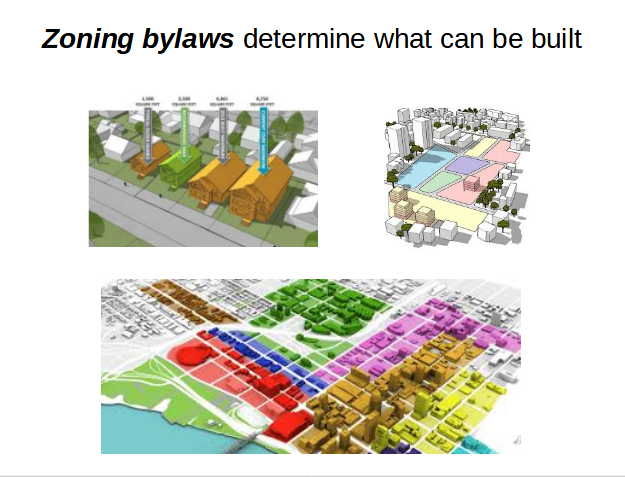
Zoning regulates how many homes or condos are allowed on an acre of land [“residential build out”]. The proposed changes would be the most significant changes to zoning in Acton history. Zoning changes being proposed for passage at the May 2024 Town Meeting include: 1. MBTA zoning 2. PowderMill zoning 3. South Acton Village zoning The Town has yet to quantify the impact of the proposed zoning. Based on our own research, we believe the zoning will increase tenant displacement risk, reduce housing affordability, increase carbon footprint, increase taxes/water-cost, increase traffic, decrease walkability, decrease water availability, or create other negative impacts Here are just SOME of the concerns... Water/Quantity/Quality/Cost risks/impacts The Acton Water District has expressed concerns about the proposed zoning on 4/2/2024 [sent to the Planning Board]: "A significant increase in new and/or redevelopment projects that includes high-density residential and certain types of commercial water users (i.e., restaurants) that have not been previously accounted for in the District's long-term planning efforts could use up or exceed the remaining available capacity under the District's current WMA Permit and Registration." When the water capacity runs out, important town goals will be less likely to be achieved. In other words, if the water is used up by a race to build market-rate [unaffordable housing]. Just some of the important town goals that there could not be water for: - affordable housing - restaurants - farming The Acton Water District has not told us how the zoning changes would impact the quantity/quality/cost of our water because the Town has refused to say how many condos could be created with the propose zoning. The Town has said that it's impossible to know. And yet other towns, like Milton have gotten their consulitants to do this analysis with the money the state provided each town. More info Housing Affordability MBTA and SAV zoning articles is likely to destroy more affordable housing that it would create. The PowderMill Zoning article will create ZERO affordable housing. While the MBTA zoning proposal would require 10% of new/additional condos to be "affordable", it appears that no “affordable” units would be reserved for people making less than $80,000/year. According the Acton's Housing Production Plan, the greatest need for affordability is for people making less than $50,000/year. Further a developer would be able to build two million dollar condos on a parcel where a single modest income home existed, so that zero affordable units would be created. If you doubt that there are such a thing as million dollar multi-family condos, look at Pearl Street where two million dollar condos are attached [the garages touch], which makes them count as "multi-family". While the Town says that condos are "probably smaller" than single-family homes, we have no evidence of that. For SAV and PowderMill zoning, there is ZERO affordable housing required. MBTA and SAV zoning will destroy more modest-income homes than it would create because the proposal includes so many existing already-affordable homes on Central Street and at Dover Heights. Loss of Income Diversity? The zoning will destroy naturally affordable existing homes and put more expensive homes in their place. As a result neighborhoods are likely to become less "income diverse", because developers work to maximize profits. And without strict requirements to require affordable housing to be created in ANY use of MBTA zoning, there will not likely be any affordable housing except for projects over 10 units, which will be few, if any. Tenant Displacement Risk? Significant changes to landlord economics is likely to drive out modest income diverse families at Dover Heights apartment complex as well as tenants in modest sized homes along Central Street, and very affordable apartments in South Acton Village. We estimate that at the Dover Heights property, over 100 market-rate [the highst price that the market will bear] condos [perhaps $1 million each] could be created, in the place of an apartment complex currently valued at less than $10 million. At some point, enough of an economic incentive would be created for the land owner to evict tenants, destroy the buildings and build new luxury condos. How much would the proposed zoning change the value of the land at Dover Heights? It appears it will increase the risk signfiicantly. More Info on Dover Heights More Info on modest-Income homes on Central Street Loss of Existing Modest/Naturally Affordable Homes/Historic Resources? With a change in economic incentives how could the proposed zoning impact existing affordable and/or historic homes? when a single house can be destroyed and 15 million dollar condos built on the site, what is likely to happen? Increase in carbon footprint? Acton has a strong commitment to reducing its carbon footprint. But MBTA Zoning will increase carbon footprint. Fiscal/Infrastructure/Roads/Stormwater/Town & School Services? If passed, how will the proposed zoning impact taxes in the coming years? Traffic/Walkability? How would the increased “build out” impact traffic especially at intersections? As with Kelley’s Corner, will additional lanes and longer crosswalks be required in South Acton? MBTA Zoning One of the 3 zoning articles planned for a vote on May 6/7 is called the "MBTA Zoning". We recognize the state has “mandated” towns pass MBTA Zoning. However, many towns which have brought the matter to a vote, as of the date of this printing, 50% of the towns have said “no”, despite the "threat" that the Attorney General will "sue" towns that refuse to pass it. . The “penalty” of the loss of a “chance” at grant funding, may or may not impact towns, because we don't know how valuable these grants will be. Many MBTA Zoning grants cost more than they provide to towns.. While the zoning proposals may bring some benefits, we don’t know at what cost to the residents. The Boston Globe reports that Of the 177 towns that are "required" to pass MBTA Zoning, more and more have decided to wait until the fall. The MBTA mandate from the Governor is meant to solve the housing crisis. That crisis is among the lowest income segments of the population, which means that all or most of the new housing must affordable for the mandate to meet the intent of law, and we need our questions answered if we are to know that our actions meet the intent of the MBTA zoning law. The current Acton proposal does not appear to address this crisis. See media coverage on MBTA Zoning: Boston Globe MassLive CommonwealthBeacon ""Milton’s biggest claim is over guidelines that the state housing office created for the law in 2022, which shape how towns draw their new zoning districts. They dictate how large the districts have to be, how dense, what sort of zoning restrictions are still permissible, and what aren’t. Those guidelines, the town claimed Wednesday, are “arbitrary and capricious, unconstitutional, and otherwise unlawful.”
"But their broader claim is that the guidelines aren’t legal. Attorneys for the town argue that because the guidelines are not in the actual statute passed by the Legislature, they are not legally enforceable. "
"Their other big claim is that Campbell lacks authority to enforce MBTA Communities. That sort of authority, they claim, can only be granted to her by the Legislature, and the law does not explicitly say that the attorney general can compel compliance." Boston Globe VOTE NO! on MBTA, PowderMill and SAV zoning until we fix these major issues!
Zoning regulates how many homes or condos are allowed on an acre of land [“residential build out”]. The proposed changes would be the most significant changes to zoning in Acton history. Zoning changes being proposed for passage at the May 2024 Town Meeting include: 1. MBTA zoning 2. PowderMill zoning 3. South Acton Village zoning The Town has yet to quantify the impact of the proposed zoning. Based on our own research, we believe the zoning will increase tenant displacement risk, reduce housing affordability, increase carbon footprint, increase taxes/water-cost, increase traffic, decrease walkability, decrease water availability, or create other negative impacts Here are just SOME of the concerns... Water/Quantity/Quality/Cost risks/impacts The Acton Water District has expressed concerns about the proposed zoning on 4/2/2024 [sent to the Planning Board]: "A significant increase in new and/or redevelopment projects that includes high-density residential and certain types of commercial water users (i.e., restaurants) that have not been previously accounted for in the District's long-term planning efforts could use up or exceed the remaining available capacity under the District's current WMA Permit and Registration." When the water capacity runs out, important town goals will be less likely to be achieved. In other words, if the water is used up by a race to build market-rate [unaffordable housing]. Just some of the important town goals that there could not be water for: - affordable housing - restaurants - farming The Acton Water District has not told us how the zoning changes would impact the quantity/quality/cost of our water because the Town has refused to say how many condos could be created with the propose zoning. The Town has said that it's impossible to know. And yet other towns, like Milton have gotten their consulitants to do this analysis with the money the state provided each town. More info Housing Affordability MBTA and SAV zoning articles is likely to destroy more affordable housing that it would create. The PowderMill Zoning article will create ZERO affordable housing. While the MBTA zoning proposal would require 10% of new/additional condos to be "affordable", it appears that no “affordable” units would be reserved for people making less than $80,000/year. According the Acton's Housing Production Plan, the greatest need for affordability is for people making less than $50,000/year. Further a developer would be able to build two million dollar condos on a parcel where a single modest income home existed, so that zero affordable units would be created. If you doubt that there are such a thing as million dollar multi-family condos, look at Pearl Street where two million dollar condos are attached [the garages touch], which makes them count as "multi-family". While the Town says that condos are "probably smaller" than single-family homes, we have no evidence of that. For SAV and PowderMill zoning, there is ZERO affordable housing required. MBTA and SAV zoning will destroy more modest-income homes than it would create because the proposal includes so many existing already-affordable homes on Central Street and at Dover Heights. Loss of Income Diversity? The zoning will destroy naturally affordable existing homes and put more expensive homes in their place. As a result neighborhoods are likely to become less "income diverse", because developers work to maximize profits. And without strict requirements to require affordable housing to be created in ANY use of MBTA zoning, there will not likely be any affordable housing except for projects over 10 units, which will be few, if any. Tenant Displacement Risk? Significant changes to landlord economics is likely to drive out modest income diverse families at Dover Heights apartment complex as well as tenants in modest sized homes along Central Street, and very affordable apartments in South Acton Village. We estimate that at the Dover Heights property, over 100 market-rate [the highst price that the market will bear] condos [perhaps $1 million each] could be created, in the place of an apartment complex currently valued at less than $10 million. At some point, enough of an economic incentive would be created for the land owner to evict tenants, destroy the buildings and build new luxury condos. How much would the proposed zoning change the value of the land at Dover Heights? It appears it will increase the risk signfiicantly. More Info on Dover Heights More Info on modest-Income homes on Central Street Loss of Existing Modest/Naturally Affordable Homes/Historic Resources? With a change in economic incentives how could the proposed zoning impact existing affordable and/or historic homes? when a single house can be destroyed and 15 million dollar condos built on the site, what is likely to happen? Increase in carbon footprint? Acton has a strong commitment to reducing its carbon footprint. But MBTA Zoning will increase carbon footprint. Fiscal/Infrastructure/Roads/Stormwater/Town & School Services? If passed, how will the proposed zoning impact taxes in the coming years? Traffic/Walkability? How would the increased “build out” impact traffic especially at intersections? As with Kelley’s Corner, will additional lanes and longer crosswalks be required in South Acton? MBTA Zoning One of the 3 zoning articles planned for a vote on May 6/7 is called the "MBTA Zoning". We recognize the state has “mandated” towns pass MBTA Zoning. However, many towns which have brought the matter to a vote, as of the date of this printing, 50% of the towns have said “no”, despite the "threat" that the Attorney General will "sue" towns that refuse to pass it. . The “penalty” of the loss of a “chance” at grant funding, may or may not impact towns, because we don't know how valuable these grants will be. Many MBTA Zoning grants cost more than they provide to towns.. While the zoning proposals may bring some benefits, we don’t know at what cost to the residents. The Boston Globe reports that Of the 177 towns that are "required" to pass MBTA Zoning, more and more have decided to wait until the fall. The MBTA mandate from the Governor is meant to solve the housing crisis. That crisis is among the lowest income segments of the population, which means that all or most of the new housing must affordable for the mandate to meet the intent of law, and we need our questions answered if we are to know that our actions meet the intent of the MBTA zoning law. The current Acton proposal does not appear to address this crisis. See media coverage on MBTA Zoning: Boston Globe MassLive CommonwealthBeacon ""Milton’s biggest claim is over guidelines that the state housing office created for the law in 2022, which shape how towns draw their new zoning districts. They dictate how large the districts have to be, how dense, what sort of zoning restrictions are still permissible, and what aren’t. Those guidelines, the town claimed Wednesday, are “arbitrary and capricious, unconstitutional, and otherwise unlawful.”
"But their broader claim is that the guidelines aren’t legal. Attorneys for the town argue that because the guidelines are not in the actual statute passed by the Legislature, they are not legally enforceable. "
"Their other big claim is that Campbell lacks authority to enforce MBTA Communities. That sort of authority, they claim, can only be granted to her by the Legislature, and the law does not explicitly say that the attorney general can compel compliance." Boston Globe VOTE NO! on MBTA, PowderMill and SAV zoning until we fix these major issues!